 how-to
How to Get a Commercial Renovation Project Quote
Table of Contents
- Why Getting Multiple Commercial Renovation Quotes Matters
- What Information to Prepare Before Requesting a Commercial Renovation Quote
- Understanding Commercial Renovation Scope of Work Template
- Evaluating a Commercial Renovation Cost Estimate
- Commercial Renovation Project Timeline: What to Expect
- The Commercial Contractor Bidding Process Explained
- Red Flags and How to Avoid Hidden Costs
- Getting Your Commercial Renovation Quote Started
- Frequently Asked Questions
Last Updated: October 16, 2026
Why Getting Multiple Commercial Renovation Quotes Matters
A single quote tells you one contractor's price. When you're investing tens of thousands of dollars in a commercial renovation, the difference between a thorough bidding process and a rushed decision can mean the difference between a project that runs smoothly and one that drains your budget and sanity.
Getting multiple bids forces contractors to justify their approach and pricing. It gives you use to negotiate. It protects you from being locked into a bad contract before you've truly evaluated your options. Most importantly, it signals to every contractor that you're serious, informed, and comparing them against others. That accountability matters.
What Information to Prepare Before Requesting a Commercial Renovation Quote
Before you contact contractors, gather the information they'll need to provide an accurate estimate. Vague requests produce vague quotes. Detailed requests produce detailed, comparable bids.
Document your space and existing conditions
Walk through your commercial property with a notebook, camera, or both. Measure key areas. Photograph existing conditions, especially any damage, outdated systems, or structural concerns. Note the age of the building, the current layout, and any quirks or challenges you've noticed. Are there load-bearing walls? Asbestos or outdated electrical? Plumbing that needs replacement?
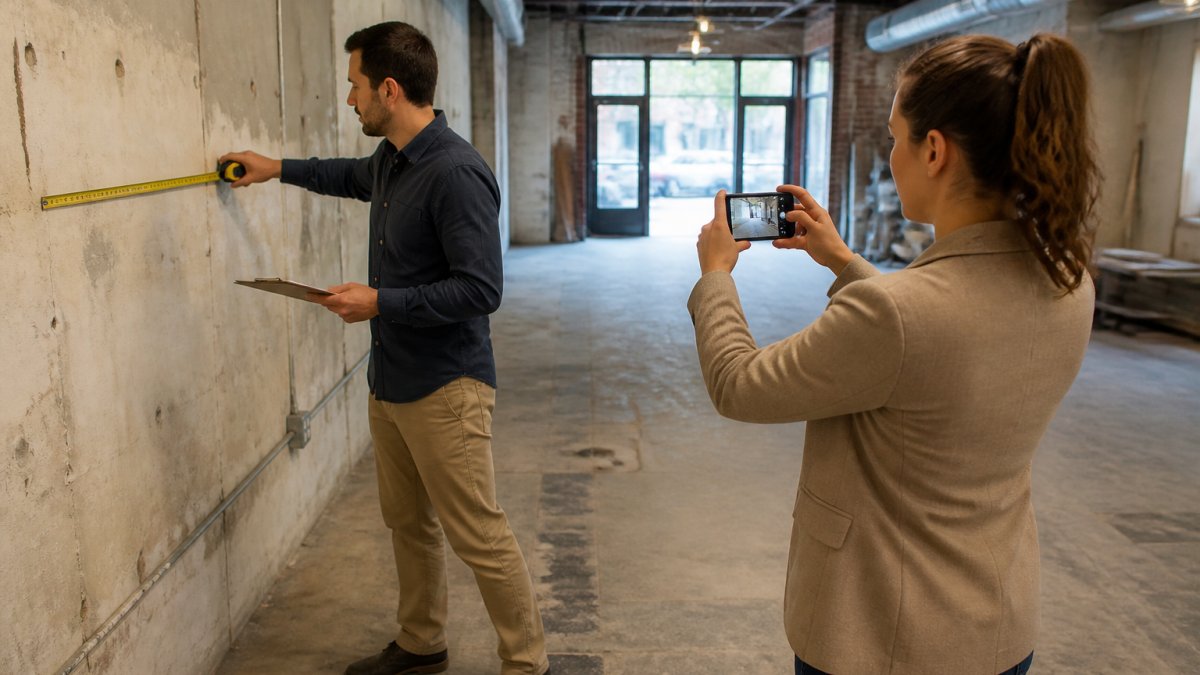
Take photos of:
- The overall space from multiple angles
- Existing finishes (flooring, walls, ceilings)
- Mechanical systems (HVAC, electrical panels, plumbing)
- Any visible damage or wear
- Ceiling heights and structural elements
This documentation prevents contractors from claiming they didn't know about a problem. It also helps them spot issues during their site visit that affect the estimate.
Define your project goals and scope
Write down exactly what you want to accomplish. Are you upgrading an office lobby? Expanding a retail floor? Installing new tenant improvements? Replacing outdated systems? Improving accessibility for customers or employees?
Be specific about what's included and what's not. Do you want new flooring, or just refinished existing floors? Are you replacing fixtures, or just updating finishes? Do you need new walls, or reconfiguration of existing ones? Are permits and inspections included in the scope, or handled separately?
The more clearly you define the scope, the more apples-to-apples your quotes will be. Contractors who estimate based on vague requests will make different assumptions about what's included, leading to quotes that aren't truly comparable.
Understanding Commercial Renovation Scope of Work Template
A scope of work is a written document that lists every task, material, and service included in the project. It's the foundation of your contract and the reference point when disputes arise about what was promised versus what was delivered.
A solid commercial renovation scope of work should include:
- Project description: What's being renovated and why
- Specific tasks: Demolition, framing, electrical work, plumbing, HVAC, finishes, painting, etc.
- Materials: Brands, grades, and specifications for flooring, fixtures, paint, hardware, and other materials
- Labor: Who performs what work and how long it's estimated to take
- Timeline: Start date, key milestones, and expected completion date
- Permits and inspections: Who obtains them, who pays, and how they're scheduled
- Change order process: How modifications are requested, approved, and priced
- Cleanup and site management: How debris is removed and the space is kept safe during work
- Warranty and guarantees: What's covered and for how long
When contractors provide a quote, ask them to include a detailed scope of work. If they give you a one-page price estimate with vague descriptions, that's a red flag. You need specificity so you understand exactly what you're paying for and what happens if something changes.
Evaluating a Commercial Renovation Cost Estimate
A cost estimate breaks down the total project price into categories: labor, materials, permits, contingencies, and profit. Understanding these components helps you spot inflated pricing, compare quotes fairly, and anticipate where costs might rise.
Line items, allowances, and contingencies
A detailed estimate lists line items. Each line item covers a specific task or material. For example:
- Demolition of existing flooring: $3,200
- Installation of new tile flooring: $8,500
- Electrical panel upgrade: $5,800
- HVAC ductwork replacement: $12,400
Allowances are budget placeholders for items that haven't been fully specified yet. For example, if you haven't chosen paint colors, the contractor might include a $2,000 paint allowance. When you finalize the color selection, the actual cost might be $1,800 or $2,200, and the allowance adjusts accordingly.
Contingencies are reserves for unexpected costs. Commercial spaces often hide surprises: hidden structural damage, outdated wiring, mold, or code violations that require remediation. A typical contingency is 10-15% of the total project cost. This protects you from the project going over budget when issues surface.
When comparing quotes, look for:
- Detailed line items (not lumped categories)
- Clear allowances with dollar amounts
- A stated contingency percentage
- Exclusions (what's NOT included)
What drives commercial renovation costs
Labor is usually the largest cost driver. Skilled trades, electricians, plumbers, HVAC technicians, carpenters, command hourly rates.
Materials vary widely based on quality and specification. Premium finishes cost more than standard ones. Custom work costs more than off-the-shelf solutions.
Permits and inspections add cost and time. Commercial projects typically require more permits than residential ones because they must meet code requirements for occupancy, accessibility, fire safety, and mechanical systems.
Site conditions matter. If the existing structure is sound, renovation costs less than if you discover structural damage or hazardous materials that require professional remediation.
Timeline affects labor costs. A rushed project costs more because contractors may need to bring in extra crews or work overtime.
Commercial Renovation Project Timeline: What to Expect
Commercial projects move at different speeds depending on scope, complexity, and site conditions. A simple office refresh might take 4-8 weeks. A major renovation with system upgrades could take 4-6 months or longer.
Timeline expectations should be included in your estimate. Ask contractors to provide:
- Project start date
- Key milestones (permit approval, rough-in inspections, final inspections)
- Expected completion date
- Any seasonal or scheduling constraints
Be realistic. Contractors who promise unrealistically fast completion either underestimate the work or plan to cut corners.
Permits and inspections add time. If your project requires municipal approval before work begins, add 2-4 weeks minimum. Inspections during construction add a few days each. Final inspections and sign-off can take another week.
Ask about the contractor's process for managing the schedule. How do they handle delays? What happens if they fall behind?
The Commercial Contractor Bidding Process Explained
The bidding process is your opportunity to compare contractors, evaluate their approach, and negotiate terms before signing a contract.
How to request bids and set expectations
Contact 3-5 contractors who come recommended or have strong track records. Provide each with the same documentation: your site photos, your project description, and your scope of work outline. This ensures bids are based on the same information.
Set a deadline for quote submission. Two weeks is reasonable for a small project; three weeks for a larger one. This signals that you're serious and moving forward, not exploring casually.
Ask contractors to include:
- Detailed scope of work
- Line-item cost breakdown
- Materials list with specifications
- Project timeline and milestones
- Warranty and guarantee terms
- Insurance and licensing information
- References from recent commercial projects
When contractors submit quotes, ask clarifying questions. If something is unclear, ask them to explain. A contractor who can't or won't clarify their estimate is a risk.
Comparing bids and contractor qualifications
Don't choose based on price alone. The lowest bid often means the contractor cut scope, used cheaper materials, or underestimated labor. Compare the full package: scope, timeline, contractor experience, and communication quality.
Verify contractor qualifications:
- Are they licensed and insured?
- Do they have references from commercial projects similar to yours?
- Have they worked on projects in your building type (office, retail, industrial)?
- How long have they been in business?
- Do they have complaints with the Better Business Bureau or local licensing boards?
Call references and ask specific questions: Did the project stay on budget? Did it finish on time? Was communication clear? Would you hire them again? Did they handle unexpected issues professionally?
A contractor with 10 years of commercial experience, strong references, clear communication, and a detailed scope of work is worth paying slightly more than an unknown contractor with a rock-bottom price.
Red Flags and How to Avoid Hidden Costs
Hidden costs emerge when contractors discover problems during work that weren't apparent in the estimate. Some contractors deliberately underestimate to win the bid, knowing they'll recover costs through change orders later.
Red flags to watch for:
- Vague estimates: If the quote doesn't specify materials, labor, or timelines, it's incomplete. Ask for details before signing.
- No contingency: A quote with zero contingency reserve suggests the contractor either underestimates risk or plans to charge you for surprises as change orders.
- Unusually low price: If one bid is significantly lower than others, ask why. Cheaper materials? Fewer labor hours? Underestimated complexity? Get specifics.
- Unwillingness to put terms in writing: If a contractor resists providing a detailed scope of work or contract, walk away.
- Poor communication: If the contractor is hard to reach or vague during the bidding process, they'll likely be the same during the project.
- No insurance verification: Always verify insurance and licensing independently. Don't just take their word.
To avoid hidden costs:
- Get a detailed scope of work before signing anything
- Set a clear contingency percentage (10-15% is standard)
- Define the change order process: how changes are requested, approved, and priced
- Require written approval before any change order is executed
- Conduct a thorough site inspection with the contractor before work begins to identify potential issues
- Schedule inspections at key milestones to catch problems early
Getting Your Commercial Renovation Quote Started
The first step is gathering your documentation and contacting contractors. If you're in the Kansas City area, Sash Group Design Remodel has over 7 years of experience managing commercial renovation projects for offices, retail spaces, and tenant improvements.
Ready to move forward? Here's what to do next:
- Document your space with photos and measurements
- Write a clear description of your project goals and scope
- Contact 3-5 contractors and provide them with consistent information
- Review estimates carefully, comparing scope and timeline, not just price
- Check references and verify licensing and insurance
- Ask clarifying questions before making a decision
- Negotiate terms if needed, but prioritize quality and communication over the lowest price
Getting a commercial renovation project quote is the foundation of a successful project. The time you invest upfront in preparing documentation, contacting multiple contractors, and evaluating bids carefully pays dividends later.
Sash Group Design Remodel is ready to help. Our team prioritizes clear communication and expert craftsmanship to ensure your project stays on budget and on schedule. GET A FREE QUOTE and let's discuss your commercial renovation needs.
Frequently Asked Questions
What information should I provide when requesting a commercial renovation project quote?
Provide detailed information about your space: square footage, current layout, existing conditions, photos, and a written description of your renovation goals. Include your budget range, desired timeline, and any specific design or compliance requirements. The more complete your information, the more accurate your commercial renovation project quote will be. Also share details about building access, operational constraints, and any existing permits or plans.
How long does it typically take to receive a commercial renovation quote?
Most contractors need 3-7 business days to prepare a detailed commercial renovation project quote, depending on project complexity and site visit scheduling. Simple quotes may arrive within 2-3 days; larger or more complex projects may take 1-2 weeks. Always ask your contractor for their specific timeline when you submit your request. A detailed quote takes longer but provides better accuracy and reduces change orders later.
What should a commercial renovation cost estimate include?
A complete commercial renovation cost estimate should break down labor, materials, permits, inspections, and contingency allowances (typically 10-15% for unexpected issues). It should list specific line items, note what's included and excluded, detail any allowances for selections you haven't finalized, and specify the quote's validity period. It should also address change-order procedures and payment terms. Ask for clarification on any vague line items before signing.
How do I compare quotes from different commercial renovation contractors?
Compare scope of work, timeline, warranty terms, and contractor qualifications alongside pricing. Ensure each quote addresses the same project scope, different contractors may interpret requirements differently. Check insurance, licensing, and references. Request comparable detail in all quotes so you're truly comparing apples to apples. The lowest price isn't always the best value; consider the contractor's experience, communication, and track record with similar projects.