 how-to
How to Avoid Hidden Remodeling Costs: 7-Step Guide
Table of Contents
- Why Hidden Remodeling Costs Catch Homeowners Off Guard
- Step 1: Define Project Scope Before You Request a Single Bid
- Step 2: Build a Realistic Home Renovation Cost Breakdown
- Step 3: Set a Remodeling Contingency Budget That Actually Holds
- Step 4: Learn How to Compare Remodeling Estimates Line by Line
- Step 5: Control Remodeling Contract Change Orders
- Step 6: Handle a Newly Discovered Problem Without Panic
- Step 7: Track Spending and Keep the Project on Schedule
- Frequently Asked Questions
Last Updated: October 21, 2026
Why Hidden Remodeling Costs Catch Homeowners Off Guard
Learning how to avoid hidden remodeling costs starts with one hard truth: the number on your contractor's quote is rarely the number you pay. At Sash Group Design Remodel, we have watched homeowners get blindsided by line items nobody mentioned until the walls came down. Hidden remodeling costs are expenses that sit outside the original written quote. They show up as surprises, not because contractors are dishonest, but because the scope was vague and the budget had no cushion.
The Gap Between a Written Quote and the Final Invoice
A written quote covers the work someone could see and price on bid day. It rarely covers what demolition uncovers. Framing that crumbles. A slow leak behind tile. Old wiring that fails inspection.
The gap grows when the scope is loose. "Update the bathroom" can mean ten different things. The fix is simple in theory and hard in practice: define every task, then price every task. That is what the seven steps below do.
Step 1: Define Project Scope Before You Request a Single Bid
Scope is the single biggest lever you control. A clear scope tells every contractor exactly what to price, so bids come back comparable. Vague scope invites lowball quotes that grow later. Before you call anyone, write down:
- Every room and surface included
- Fixtures, finishes, and brands you want
- What stays and what gets torn out
- Your must-haves versus nice-to-haves
- A target budget range and a hard ceiling
Walk the space with a notebook. Photograph existing damage. Note anything that looks old or failing. Contractors price what you show them, so show them everything.
Step 2: Build a Realistic Home Renovation Cost Breakdown
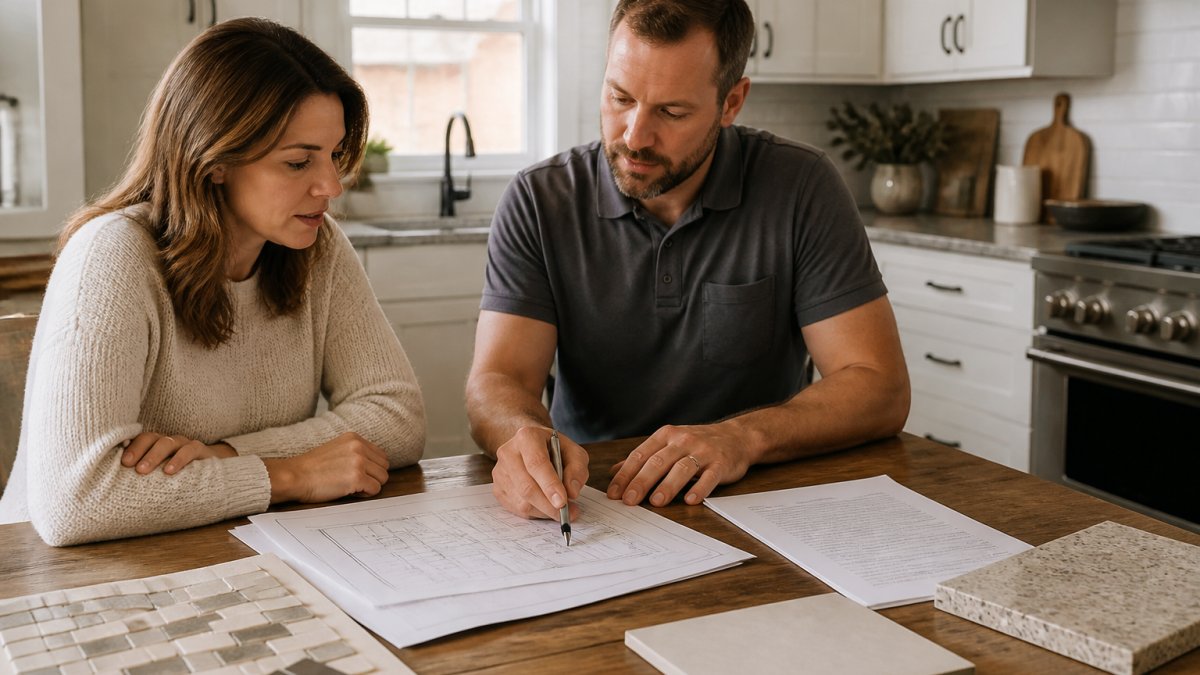
A home renovation cost breakdown turns a lump sum into line items you can check. Most budgets fail because they cover only the visible work. The real total includes labor, materials, permits, cleanup, and a reserve for surprises. Build your breakdown around these buckets:
- Labor: the largest and most variable line
- Materials: tile, cabinets, fixtures, and finishes
- Permits and inspections: required for structural, electrical, and plumbing work
- Waste removal: dumpsters and hauling
- Design and drawings: if plans are needed
- Contingency: your safety net, covered in Step 3
Line-Item Checklist by Project Type
Generic warnings about surprises are hard to apply. Use these checklists to catch the costs most often left out of the initial budget.
Kitchen remodel
- Temporary kitchen setup (microwave, mini-fridge, disposable dishware)
- Cabinet removal and disposal fees
- Appliance delivery, haul-away, and installation kits
- Plumbing relocation for sink or dishwasher
- Electrical circuits for new appliances
- Backsplash material and installation (often quoted separately from countertops)
- Under-cabinet lighting and outlets
- Range hood ducting
- Floor leveling or subfloor repair
- Permit fees for electrical, plumbing, and mechanical work
- Sales tax on materials
Bathroom remodel
- Waterproofing membrane and backer board
- Exhaust fan and ducting to exterior
- Shutoff valve replacement
- Drain and supply line relocation
- Toilet flange and wax ring replacement
- Vanity, mirror, and lighting installation
- Tile trim, thresholds, and sealant
- Glass shower door and hardware
- Permit fees and inspection scheduling
- Mold remediation if moisture is found
Whole-home or addition
- Architectural drawings and engineering stamps
- Survey and site plan
- Permit fees at multiple stages
- Temporary housing or rental costs during work
- Storage unit for furniture and belongings
- Utility disconnects and reconnects
- HVAC sizing and ductwork changes
- Structural engineering letters
- Final cleaning and debris hauling
- Landscaping repair after excavation or delivery damage
Costs That Hide in Plain Sight
These are the quiet budget killers. Add them before you sign anything.
- Building permit fees and inspection costs
- Dumpster rental and hauling
- Temporary storage or housing during work
- HOA approval fees and design review
- Moving and protecting furniture
- Final cleaning and touch-up
- Sales tax on materials
Ask each contractor whether their quote includes these. Get the answer in writing. A quote that lists "dumpster included" is worth more than one that stays silent.
Step 3: Set a Remodeling Contingency Budget That Actually Holds
A remodeling contingency budget is money set aside for the unknown, and it is the most skipped line in home renovation. Generic advice says "reserve 10% to 20%," but that range is too wide to be useful. A better approach is to calculate your reserve from three inputs: project scope, home age, and uncertainty level.
A Practical Contingency Calculation
Start with a base rate tied to the type of work:
- Cosmetic-only projects (paint, flooring, fixtures, no wall changes): 5% to 10% of the contract price
- Moderate remodels (kitchen or bathroom with some plumbing or electrical relocation): 10% to 15%
- Structural or whole-home projects (load-bearing changes, additions, full gut renovations): 15% to 20%
Then adjust for home age and condition:
- Homes under 20 years old with documented maintenance history: no adjustment
- Homes 20 to 50 years old: add 3 to 5 percentage points
- Homes over 50 years old or with unknown renovation history: add 5 to 10 percentage points
Finally, adjust for uncertainty:
- Permit drawings complete and contractor walkthrough done: no adjustment
- No drawings yet or scope still evolving: add 5 percentage points
- Known deferred maintenance (old roof, failing HVAC, outdated wiring): add 5 to 10 percentage points
A 60-year-old home undergoing a kitchen gut with no drawings yet might land at 15% base + 5% age + 5% uncertainty = 25% contingency. That sounds high until a $4,000 plumbing reroute appears during demolition.
How to Hold the Reserve
Contingency is not spending money. It sits untouched unless a real problem appears. If you spend it on an upgrade, you no longer have a reserve. Label it as a separate line in your budget tracker and review the balance weekly. When a change comes up, ask: is this a need or a want? Needs draw from contingency. Wants wait for the next project.
What Counts as a Legitimate Draw
Not every surprise should tap the reserve. Legitimate draws include discovered structural damage, code-required upgrades triggered by the work, and material price increases on already-selected products. Upgrades, added scope, and design changes are not contingency items, they are change orders that should be priced and approved separately.
Step 4: Learn How to Compare Remodeling Estimates Line by Line
Knowing how to compare remodeling estimates is how you catch gaps before they cost you. Two quotes can look identical at the bottom and hide very different scopes. Compare them line by line, not total to total. Check:
- Does each quote list the same tasks?
- Are materials named by brand and model?
- Is labor broken out or bundled?
- Are permits and cleanup included?
- What is excluded, and why?
Auditing the Contractor Estimate and Contract
Audit the contractor estimate and contract before signing. Look for vague language like "allowance" without a dollar figure, or "as needed" without limits. Check the payment schedule, change order process, and timeline. A clear contract names who pays for what when surprises appear.
FTC consumer guidance on home improvement contracts is a useful checklist for what a fair contract should include.
Step 5: Control Remodeling Contract Change Orders
Remodeling contract change orders are written amendments to the original agreement. Every scope change, material swap, or discovered problem should trigger one. The danger is verbal changes. A quick "we'll just add that" becomes a bill later.
Control change orders with three habits:
- Require every change in writing before work starts
- Get the cost and timeline impact on paper
- Approve nothing you have not read
Step 6: Handle a Newly Discovered Problem Without Panic
A newly discovered problem is not a crisis if you have a process. Demolition reveals what inspections cannot. Here is how we handle it:
- Stop work in that area only
- Document the issue with photos
- Get a written diagnosis and fix options
- Price each option with cost and timeline impact
- Choose, sign a change order, then resume
This sequence keeps the rest of the project moving while you decide. Panic spending happens when there is no process. A written one protects your budget.
HUD guidance on home improvement and renovation covers programs and consumer protections worth reviewing before major structural work.
Step 7: Track Spending and Keep the Project on Schedule
Budget tracking is a weekly habit, not a year-end review. Keep one spreadsheet with your original budget, approved changes, and actual spend. Update it every week. Compare it to the project timeline so you spot drift early.
| What to Track | How Often | Why It Matters |
|---|---|---|
| Original budget vs. actual | Weekly | Catches over-spending early |
| Approved change orders | Per change | Keeps scope and cost aligned |
| Contingency balance | Weekly | Shows your remaining safety net |
| Timeline vs. milestones | Weekly | Flags delays before they cascade |
| Upcoming payments | Per milestone | Avoids surprise invoices |
Check in with your contractor on a set schedule. Ask what is coming next week and what could change. Clear communication is the cheapest cost-control tool you have.
Hidden remodeling costs are rarely random. They come from vague scope, thin budgets, and verbal changes. Sash Group Design Remodel has over seven years of experience helping homeowners plan projects with clear scopes, honest estimates, and client-centered project management that keeps surprises on paper, not on your invoice. We build seamless design and build integration so one team owns the whole project and communicates every step. Get a free quote and start your remodel with a budget you can actually trust.
Frequently Asked Questions
What are the most common hidden remodeling costs?
The costs that most often surprise homeowners are structural and water damage found during demolition, permit and inspection fees, upgraded finishes chosen mid-project, waste removal and dumpster rental, and temporary storage or housing. Labor overruns from extended timelines also add up quickly. A detailed home renovation cost breakdown that lists each of these categories before work begins is the most reliable way to spot them early. Ask your contractor to walk through every line item in the written quote so nothing stays vague.
How much should I set aside for unexpected remodeling costs?
A remodeling contingency budget typically ranges from 10 to 20 percent of the total project cost, with the higher end for older homes or projects that involve demolition of unseen areas. If you are opening walls or changing plumbing and electrical, lean toward 20 percent. Keep the reserve separate from your finish budget so an upgrade decision does not quietly consume it. Review the reserve with your contractor at the start and agree on which types of surprises it covers.
How can I avoid surprise charges from change orders?
Review remodeling contract change orders carefully before signing anything. A fair change order states the added work, the cost, and the timeline impact in writing, and it should be signed before the work starts. Ask your contractor upfront how change orders are priced, whether there is a markup, and what happens if a change is needed because of a hidden defect. Keeping a written log of every approved change helps you track the running total against your contingency fund.
How do I compare remodeling estimates fairly?
Line up bids side by side using the same scope document, then check whether each one lists labor, materials, permits, waste removal, and allowances separately. A low total often means an allowance is unrealistically small or a cost is simply missing. Ask each contractor to explain what is excluded. Comparing remodeling estimates this way shows you the real price rather than the headline number, and it gives you a clear basis for asking follow-up questions before you sign a contract.